The CELLS’26 speakers are, in alphabetical order:
Sapienza University of Rome
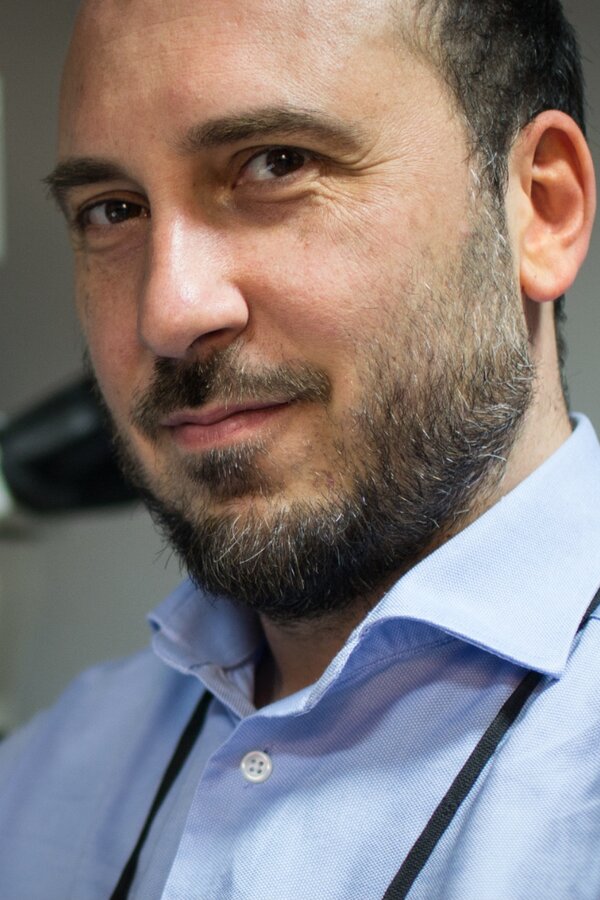
Bio. Roberto Di Leonardo is Full Professor in the
Department of Physics at Sapienza University of Rome, where he teaches biophysics. After a Ph.D. in
physics from the University of L’Aquila, he moved to Sapienza University as a CNR researcher. As a
research fellow at the University of Glasgow, he began working with holographic optical tweezers to study
the statistical and fluid dynamics of small systems. Back in Rome, his research turned to flagellar
propulsion, with a focus on harnessing motile bacteria to power miniaturized devices. In 2016, he became
Associate Professor of Physics at Sapienza University of Rome and, more recently, expanded his research
into synthetic biology, using engineered bacteria as programmable building blocks for active materials.
His honors include the Premio Le Scienze, a Presidential Medal in Italy, and multiple ERC grants,
including a Starting Grant (2012), Proof of Concept Grants (2017 and 2026), and an Advanced Grant (2018).
Programming cell behavior with light
Abstract. In this talk, I will focus on three
light-activated proteins from evolutionarily diverse unicellular organisms and show how they can serve as
optical interfaces to program motility and gene expression. Using a light-driven proton pump, we establish
feedback loops that allow computer programs to dynamically control bacterial motility. This enables
bacteria to function as light-reconfigurable “paint,” generate forces for transporting microscopic
objects, and power biohybrid microrobots capable of collecting and delivering microscopic cargo. By
rewiring a cyanobacterial light-activated kinase into a synthetic genetic clock in E. coli, light can act
as a zeitgeber, driving coherent population-wide oscillations in gene expression. The same optical control
can switch a genetic bistable circuit, creating a light-addressable memory whose switching dynamics
provide a stochastic framework for understanding noise-driven transitions in genetic bistability. Finally,
we exploit the natural photophobic response triggered by a light-activated cyclase in Euglena gracilis to
design static “light containers” that can spatially sort cells, leveraging the non-equilibrium nature of
this biological version of the billiards problem.
Inria
Bio.
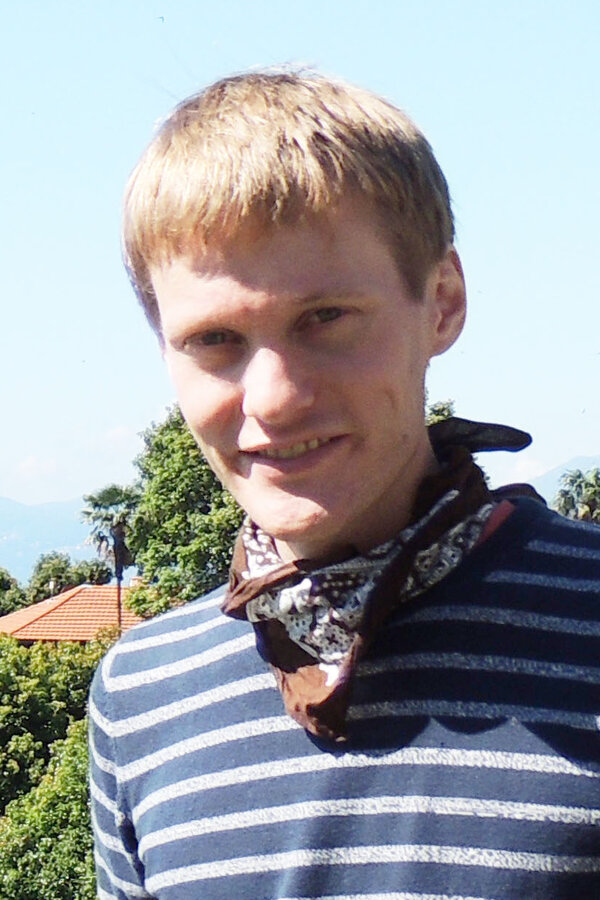
Jakob Ruess received his PhD in 2015 from the Automatic Control Laboratory at ETH Zurich, Switzerland,
where he worked under the supervision of John Lygeros on using moment equations of stochastic reaction
networks for problems such as parameter inference and experimental design. He moved on to IST Austria for
a postdoc where he worked together with Remy Chait, Gasper Tkacik and Calin Guet to realize the first
study on optogenetic feedback control of gene expression dynamics inside single cells. Since 2016, he is a
permanent researcher at Inria. Until 2022, he worked at Institut Pasteur in Paris in a joint Inria-Pasteur
team in close collaboration with experimental biologists. In 2022, he received an ERC Starting Grant on
studying the dynamics of coupled stochastic single-cell and population processes and moved to Inria Saclay
to carry out this research project.
Coupling stochastic models of single-cell reactions to the dynamics of growing
microbial populations and consortia
Abstract.
At the single-cell level, biochemical processes are inherently stochastic. Such processes are typically
studied using models based on stochastic chemical kinetics, governed by a chemical master equation (CME).
The CME describes the time evolution of the probability distribution over system states and has been a
tremendously helpful tool in shedding light on the functioning of cellular processes. However, single
cells are not living in isolation but are part of a growing population or community. In such contexts,
stochasticity at the single-cell scale leads to population heterogeneity and cells may be subject to
population processes, such as selection, that drive the population distribution away from the probability
distribution of the single-cell process.
Here, I will introduce a multi-scale modeling framework that allows one to capture coupled stochastic
single-cell and population process. I will show that the expected population distribution of such
multi-scale models can be calculated by solving a modified version of the CME that is of the same
dimensionality as the standard CME. I will then show how such models can be used to explain experimental
data on plasmid copy number fluctuations and population growth in selective media as well as the emerging
population dynamics of a light-tunable differentiation system that has been synthetically engineered in
yeast cells. I will conclude by discussing the practically inaccurate assumption of exponentially
distributed cell-cycle durations that our modeling framework inherits from the chemical master equation
and present some recent work on age-structured models that can incorporate more realistic distributions of
cell-cycle durations.
OV
Duke University
Bio. TBA
TBA
Abstract. TBA